
Removing a tree stump professionally means more than chopping away leftover wood — it removes a long-term hazard, reduces pest and disease risk, and frees space for landscaping or construction.
This guide explains professional tree stump removal in practical terms, covering the main removal methods, typical costs, homeowner benefits, decision criteria between grinding and full removal, and how to find qualified local services in North Carolina. Many homeowners face unclear pricing and conflicting advice about grinding, chemical decomposition, or full excavation; this article gives clear mechanisms, example cost estimates, and step-by-step decision guidance to simplify hiring. You will learn how stump grinders work, how chemical and manual techniques differ in timeframe and impact, which variables drive price, and how to vet providers and permits in North Carolina. Throughout, the focus is on actionable, evidence-based information to help you choose the safest, most cost-effective option for your site and goals.
Professional stump removal uses four primary approaches that vary by speed, cost, and site impact: stump grinding, chemical decomposition, manual excavation, and full stump removal with root extraction. Each method targets different homeowner goals — quick clearance, minimal disturbance, long-term root removal, or environmental restraint — and professionals select a technique based on stump size, proximity to structures, and timeline. Understanding the mechanism and typical use-case for each method helps homeowners set realistic expectations about outcomes, cleanup, and replanting timelines.
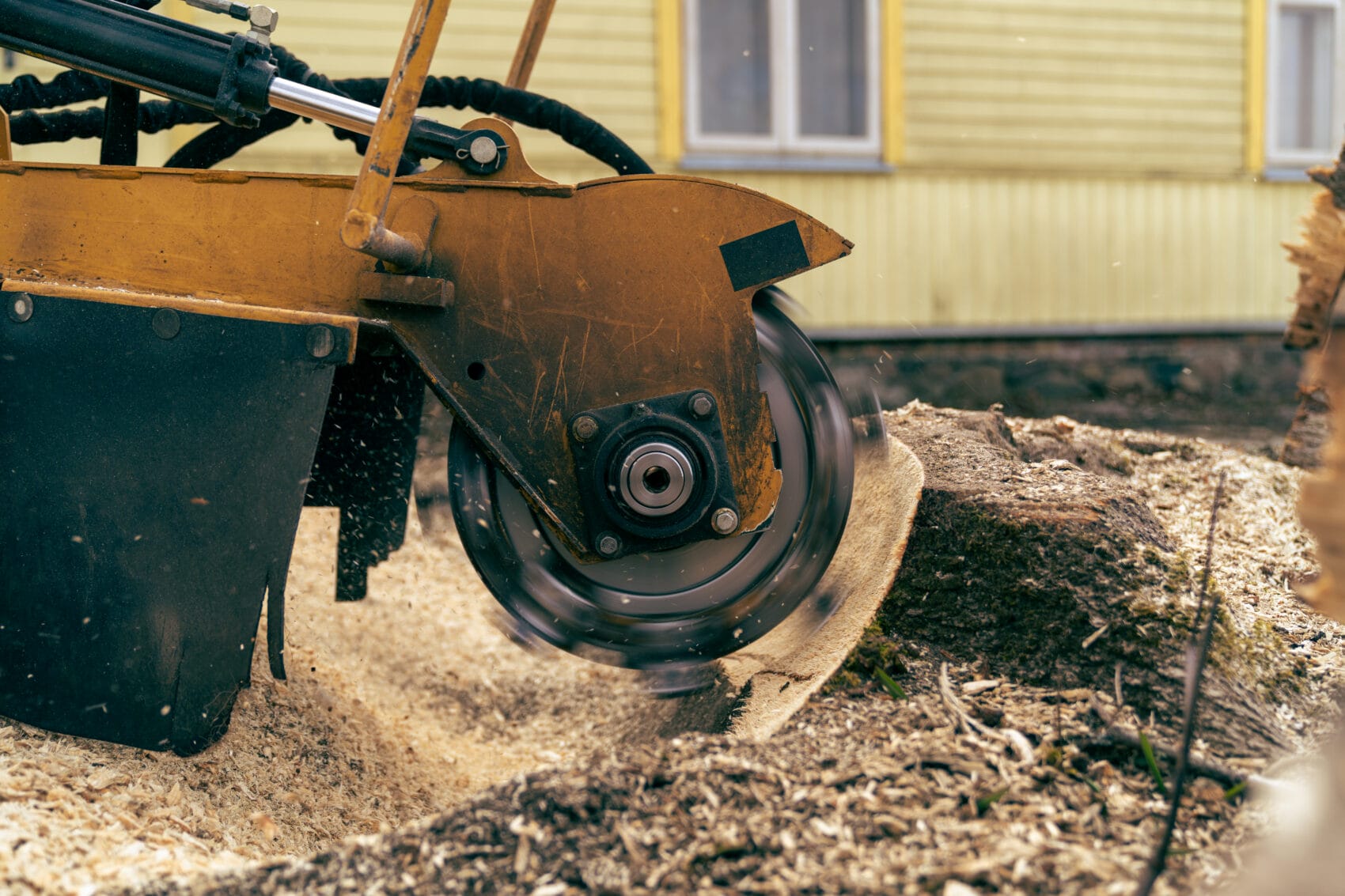
Below is a concise overview of the main methods and their appropriate uses. Common professional stump removal methods include Stump Grinding, where a rotating cutter wheel chips the visible stump into wood chips while leaving most roots in place, ideal for landscaping and quick clearance. Chemical Stump Removal uses chemical accelerants to break down wood fiber over weeks to months, suitable for low-traffic areas where time is not a constraint. Manual Stump Removal involves hand tools and cutting to remove small stumps and roots by excavation, best for accessible, small-diameter stumps. Finally, Full Stump Removal uses heavy equipment to excavate the stump and major roots entirely, required for construction, utility access, or root-related disease control.
These methods differ in timeline and impact: grinding is fast and minimally invasive, chemical treatments are slow but low-equipment, manual removal is labor-intensive, and full extraction is thorough but disruptive. The next subsection explains how stump grinding works and why it is the most commonly chosen professional solution for homeowners.
Stump grinding is a mechanical process that uses a specialized stump grinder — a machine with a rotating cutting wheel — to reduce a stump to wood chips several inches below grade, allowing the site to be regraded or replanted. The grinder’s teeth chip away at the wood in controlled passes, creating mulch that can be reused on-site or hauled away, and the process typically takes less than an hour for small to medium stumps. Safety measures include protective barriers, eyewear, and a trained operator to avoid damage to nearby structures, utilities, or landscaping. Homeowners benefit from speed, lower cost than full excavation, minimal soil disturbance, and immediate improvement in yard appearance and usability. Expect root decay to continue naturally after grinding; seeds or deep roots may still require future attention if new plantings need deep anchoring.
Chemical stump removal accelerates wood decomposition by applying oxidizing agents such as potassium nitrate, which increase moisture retention and microbial breakdown; this method can take several weeks to many months before the wood becomes soft enough to break up and remove. Application requires drilling holes, adding the chemical, and monitoring, with safety precautions to avoid runoff and unintended exposure; it is less labor-intensive upfront but slower and not suitable where rapid clearance is needed. Manual removal uses chainsaws, mattocks, and shovels to cut and dig around the stump and major roots for small-diameter stumps in accessible areas, providing full control but demanding significant physical labor and time. Environmental considerations and permit rules may restrict certain chemicals or burning techniques, so homeowners should weigh safety and timelines before choosing chemical or manual approaches for stump removal.
For homeowners who prefer professional assistance, ArborPro Tree Service, LLC can provide a free consultation to help determine the best method for a specific stump and site conditions; contact the company to request a no-obligation estimate from a qualified technician who can assess size, roots, and access factors.
Comparing grinding to full stump removal clarifies trade-offs between cost, thoroughness, and site disruption. Stump grinding generally costs less because it removes the aboveground portion quickly and requires less excavation and soil disturbance. Full removal (excavation and root extraction) costs more due to heavier machinery, longer labor, and the need to fill and compact the excavation afterward. For homeowners planning construction, deep replanting, or facing root-borne disease, full removal may be the prudent choice despite higher cost.
Removing tree stumps delivers several clear homeowner benefits that extend beyond aesthetics: it reduces trip hazards, lowers pest and disease risk, restores usable space, and can improve curb appeal for resale. Each benefit operates through a mechanism — for instance, removing infected wood eliminates a reservoir for pathogens — and produces measurable outcomes like fewer wood-boring insect sightings or a smoother lawn surface for landscaping.
Removing stumps improves curb appeal by removing unsightly remnants and creating a uniform lawn or planting area, which can positively influence buyer perception and property marketability. From a safety standpoint, elimination of protruding stumps and hidden roots reduces trip-and-fall hazards for residents and visitors, lowering liability risk especially in yards used by children or older adults. Inspections prior to sale often note significant yard defects; a professionally removed and backfilled stump can prevent a minor issue from becoming a negotiation point. The practical result is a cleaner presentation for showings and a safer day-to-day environment for occupants and guests.
Stumps act as reservoirs for wood-decaying fungi and wood-boring insects like termites and carpenter ants; these pests can migrate from decaying stump material into nearby structures or live trees over time. Removing the stump eliminates the food source and interrupts the infestation cycle, reducing the likelihood that pests will establish a nearby population. In cases of disease, infected root systems can persist and spread spores or fungal tissue; full removal or deep grinding reduces the inoculum load in the soil. As a result, homeowners often see a measurable decline in pest activity and a reduced chance of secondary infections in surrounding landscape plantings.
Choosing between stump grinding and full removal depends on project goals (e.g., replanting depth, construction), budget, and site conditions. If your primary goal is quick landscape restoration and low cost, grinding is typically the recommended option; if you plan to build on the site, require deep root removal, or need assurance against root-borne disease, full excavation may be required. A practical decision framework compares desired outcomes to constraints, guiding homeowners to the appropriate solution. The short decision guide below provides clear rules of thumb to help select the best approach.
Decision guide — when to choose which method: For routine landscaping, fast clearance, mulch reuse, and minimal soil disturbance, stump grinding is often the best choice. However, if construction, deep replanting, or disease control necessitates the removal of major roots, full stump removal is required. Chemical or manual removal should be considered for very small stumps, remote sites, or when time is not an immediate constraint. Make your choice after verifying access, root impact, and any permit needs.
Stump grinding’s advantages are speed, lower cost, and reduced disruption, but it leaves roots that may limit deep replanting and can allow resprouting in some species. Full removal is more thorough — removing primary roots and reducing regrowth risk — but it is more expensive, increases soil disturbance, and requires backfill and compaction to restore grade. For many homeowners, the trade-off favors grinding unless construction or persistent root issues demand complete extraction. Consider soil restoration needs and the long-term plan for the site before selecting a method, and schedule a professional assessment to quantify the trade-offs for your specific stump.
Concrete scenarios help translate the decision framework into action: if you are clearing a stump to expand lawn space or plant shallow-rooted ornamentals, grind and regrade is usually sufficient; if you plan to install a foundation, driveway, or large tree requiring deep roots, select full removal to avoid future interference. For stumps showing active decay or evidence of wood-boring insects near structures, full removal or at least deep grinding with monitoring is recommended to reduce infestation risk. In landscapes with limited access or where machinery would damage delicate features, manual removal may be a last-resort option for small stumps. These scenarios clarify when cost savings from grinding are appropriate versus when investment in full extraction provides necessary long-term protection.
Finding local professional stump removal involves targeted search, vetting credentials, and checking locality-specific regulations. Start by compiling a short list of providers, verifying they carry insurance and use appropriate equipment, and asking for references or before/after photos of similar projects. Vetting should include questions about on-site estimates, disposal practices, damage protection for lawns or hardscapes, and whether the provider obtains permits when required. The following steps help homeowners evaluate providers consistently so you can compare proposals and select the best-fit contractor for your needs: Verify insurance and coverage to ensure the provider has liability insurance for property work. Confirm equipment capability by asking whether they use stump grinders sized for your stump and access constraints. Request a written estimate to get clear pricing that states what’s included (grinding depth, chip removal, backfill). Finally, ask about permits and local rules to confirm who will handle permit applications if required.
After using this checklist to narrow candidates, consider local regulation specifics and the value of a certified arborist for complex removals in North Carolina; the next subsection summarizes common regulatory points homeowners should verify.
Local regulations in North Carolina can affect stump removal when trees are protected, part of a historic or conservation area, or when disposal and burning rules apply; county or municipal ordinances sometimes require permits for tree removal that also cover stumps. Burning stumps is often restricted for safety and air-quality reasons, and chemical disposal or runoff concerns may be regulated; verify rules with your county or city before selecting a method. For projects involving excavation near utilities, a utility locate or approval may be required to prevent damage. Homeowners should contact their local permitting office or extension service to confirm whether a permit or notification is necessary for their planned stump work.
Certified arborists bring training, diagnosis skills, and safety practices that reduce risk and improve outcomes for complex stump removal projects. Certification indicates familiarity with tree biology, correct equipment use, and an understanding of when root systems require special attention due to disease or structural concerns. Arborists can advise on replanting strategies, disease-management plans, and whether full root removal is warranted for site safety or construction. Hiring a certified professional increases the likelihood of a correct diagnosis and safer execution, producing better long-term results for your property.
For homeowners ready to schedule an on-site estimate, contact ArborPro Tree Service, LLC to request a professional assessment and tailored quote; the company provides lead-generation consultations to help homeowners choose the right removal method based on site conditions and project goals. Next steps for homeowners include compiling stump measurements, noting access constraints, and preparing photos to share during scheduling. What to expect during an on-site estimate is that a technician will inspect stump diameter, proximity to structures, root exposure, and access before providing a written price.
Granite Falls NC 28630
Mon - 24 hours
Tue - 24 hours
Wed - 24 hours
Thur - 24 hours
Fri - 24 hours
Sat - 24 hours
Sun - Closed