
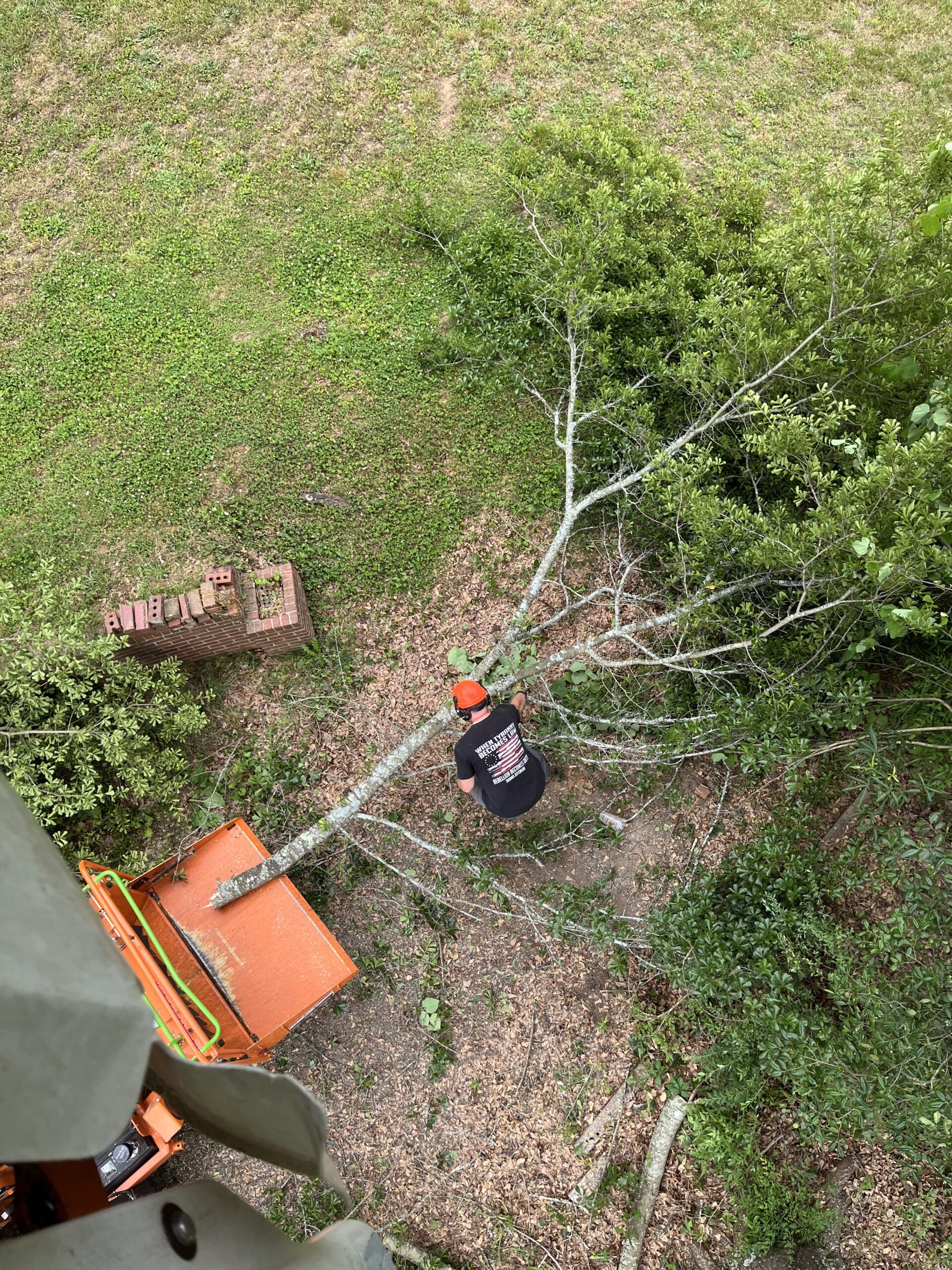
Removing a hazardous or unwanted tree is a complex decision that balances safety, cost, and local rules, and homeowners in Newton, NC need clear, practical guidance to protect property and families. This article explains what tree removal entails, how local cost ranges typically break down, when a situation becomes an emergency, and how Newton and Catawba County permitting usually works. You will also learn why hiring ISA-certified arborists matters for safety and tree health, what related services such as stump grinding and pruning involve, and how to evaluate local contractors. The guidance integrates local considerations for storm damage and insurance documentation so you can make informed choices after a storm or during planned landscape changes. Read on for cost tables, permit checklists, emergency steps, service comparisons, and vetting criteria tailored for Newton, NC property owners seeking trustworthy tree removal services.
Tree removal cost in Newton, NC varies widely but can be summarized by common scenarios and key drivers that determine final price. At a high level, average local single-tree removal ranges fall near the midpoint of national averages, with smaller, accessible yard trees at the low end and large, hazardous, or emergency removals at the high end. Major cost drivers include tree size and species, accessibility and proximity to structures, the tree’s condition (alive vs. dead or diseased), and whether specialized equipment like cranes or stump grinders is required. Understanding these factors helps homeowners estimate realistic budgets and prepare questions for an on-site quote, and the next subsection breaks down how each factor changes price in practical scenarios.
Tree size and height are primary pricing determinants because they change labor, rigging, and disposal time; taller trees require more crew time and safety precautions. Accessibility matters next: a roadside tree with clear crane access costs less than a backyard tree reachable only through a narrow gate, because extra rigging, lowering, and manual removal increase labor. Tree condition—such as diseased or dead trees—raises complexity due to brittle limbs and unpredictable breakage, necessitating additional safety measures and sometimes emergency stabilization. Species and wood density affect cutting and hauling; hardwoods generate heavier, more durable debris that takes longer to chip and remove, and this leads naturally into equipment considerations such as crane use or extended chipping that directly raise the estimate.
The next subsection explains how to obtain an accurate free estimate in Newton.
A reliable free estimate starts with an on-site inspection where the estimator evaluates size, condition, access, nearby structures, and disposal needs before providing a written quote. Homeowners should prepare by sending clear photos and noting property access points, utility locations, and any recent storm damage to streamline the initial assessment and help the estimator give a more accurate preliminary number. Written quotes should itemize labor, equipment, disposal, stump grinding (if included), and permits when applicable so you can compare proposals fairly; ask for timelines and cleanup commitments during the visit. For those ready to schedule a site visit, local providers commonly offer free on-site estimates; homeowners can request an on-site quote to confirm scope and receive formal pricing before work begins.
Preparing for that estimator meeting naturally leads into recognizing emergency situations that require immediate action.
Emergency tree removal is required when a tree poses an immediate threat to people, structures, or utilities; prompt professional intervention reduces injury risk and limits secondary damage. Typical emergencies include a tree that has fallen onto a house, a large hanging limb threatening to collapse, or a tree leaning into power lines after a storm. In such cases, the priority is safety triage—keeping people away, stabilizing the hazard, and contacting utility providers when power lines are involved—followed by professional assessment and removal using safe rigging and stabilization techniques. The next subsections explain how emergency response typically works and what homeowners should expect about response timing and insurance coordination.
In storm-damage situations, an effective response begins with triage that identifies the most immediate threats and assigns priorities for stabilization and removal to protect life and property. Crews use safety-first protocols such as establishing secure perimeters, using rigging and cranes where needed, and employing chippers and controlled lowering to avoid secondary damage; this approach minimizes risk to structures and neighboring trees. Documentation is an integral part of the process: photographs, work reports, and inventory of damaged areas help homeowners coordinate with their insurance adjusters and support claims. Professional services provide emergency storm-damage removal with safety-first practices and supports documentation for insurance purposes, while remaining focused on stabilizing the site and restoring safe access.
Response expectations vary by severity and crew availability, but homeowners should expect a professional emergency assessment within hours to a short timeframe after reporting a hazardous condition; full removal may take longer depending on equipment needs and safety constraints. For insurance, accurate documentation is essential: record damage with timestamped photos, secure the site, retain written estimates and final invoices, and request written notes from the responding crew about observed hazards and scope of work. Verify contractor insurance and ask for proof of liability coverage and workers’ compensation before permitting on-site work to avoid potential liability gaps during claims processing. Coordinating with your insurer early and keeping clear records accelerates claims and helps ensure removal work is covered where policies apply, which leads naturally to understanding local permit requirements that sometimes intersect with emergency work.
Permitting rules in Newton and Catawba County typically focus on tree size thresholds, protected species or landmark trees, and trees in designated conservation or riparian buffer areas; knowing these triggers avoids fines and project delays. Many local regulations use diameter-at-breast-height (DBH) thresholds—trees above a certain trunk diameter may require a permit or review—while other rules protect trees on public-rights-of-way or in overlay districts. Confirming requirements with the Newton or Catawba County permit office before removal ensures compliance and clarifies whether mitigation plantings or replacement fees apply. The following subsections outline when permits are commonly required and provide a step-by-step application checklist to prepare homeowners for the process.
Start an application by preparing clear site photos, a sketch or site plan showing the tree’s location relative to structures and property lines, and a written explanation of the removal reason; include species identification if known. Submit the application through the local permit office’s preferred intake method and allow for a review period—processing times vary based on project complexity and whether replacement or mitigation planting is required. Ask whether expedited review is available for storm-damage or safety-related removals and follow any post-removal reporting requirements such as submitting removal completion confirmation or replanting plans. Keeping a complete record of your submission, approvals, and receipts helps streamline compliance and ties into insurance documentation when removals follow storm events.
Hiring ISA-certified arborists ensures removals and care follow industry-standard safety protocols and arboricultural best practices that protect people, structures, and the remaining landscape. Certified arborists have demonstrated knowledge of tree biology, safe rigging techniques, correct pruning cuts, and disease diagnostics, which reduces the chance of collateral damage and improves long-term tree health on the property. They also understand regulatory and permit context and can provide documentation useful for compliance and insurance claims, creating a practical bridge between technical skill and bureaucratic requirements. The following subsections list specific benefits and describe techniques arborists use to improve outcomes and protect property.
List of benefits with short introduction and outcome summary comes next.
ISA certification signals formal training in tree biology, safety standards, and accepted pruning and removal practices, which benefits homeowners by improving reliability and outcome predictability. Certified arborists provide accurate risk assessments, recommend preservation measures for valuable trees, and apply correct pruning methods that promote long-term tree health while minimizing unnecessary removals. Their training also encompasses proper disposal practices and job-site safety protocols that protect structures and reduce cleanup burdens for homeowners. Verifying certification and insurance before hiring helps ensure the contractor’s recommendations are grounded in professional standards, which transitions naturally into how arborists apply technical methods in the field.
Arborists use pre-removal assessments that evaluate root stability, decay, and branch architecture to design removal plans that minimize property impact and protect adjacent trees. Techniques such as sectional dismantling, appropriate cutting methods, cabling or bracing for preservation, and controlled rigging with lowering systems reduce the risk of damage to structures and remaining vegetation. Post-removal recommendations—like stump grinding, soil restoration, and replacement planting—support landscape recovery and long-term site health. These technical measures form the backbone of safer, more predictable removals and lead into the related services homeowners commonly need after removal work.
Beyond full tree removal, homeowners often need complementary services like stump grinding, pruning and trimming, crane-assisted removal, and land or brush clearing; these services complete the project and restore usable yard space. Stump grinding removes visible stumps to a desired depth and turns woody material into grindings for reuse or removal; pruning and trimming maintain tree health and reduce future hazards; crane-assisted removals enable safe work on large or hard-to-access specimens. A brief note on scheduling and free estimates follows so readers can move from planning to decision-making.
Stump grinding uses a rotating cutting wheel to chip the stump down below ground level, leaving wood chips that can be redistributed on-site or removed; grinding is less disruptive than full stump excavation and preserves surrounding roots. Costs depend on stump diameter, root complexity, and whether the grindings are hauled away—typical local ranges vary accordingly. Advantages of grinding include faster site restoration, reduced safety hazards, and fewer heavy equipment impacts to lawns compared with full stump removal; some homeowners choose grinding to prepare for replanting or landscaping. Understanding these trade-offs helps homeowners decide whether grinding or excavation better suits their post-removal goals and leads into pruning benefits that support remaining trees.
The next subsection outlines pruning benefits and seasonal recommendations.
Pruning and trimming enhance tree structure, reduce storm risk by removing weak or dead branches, and improve light and air circulation that lowers disease pressure. Proper pruning techniques performed by trained professionals preserve tree health, avoid decay-prone flush cuts, and shape trees to reduce future maintenance needs, while poorly executed pruning can create long-term problems. Seasonal timing matters: late winter or early spring pruning often suits many species for health and wound closure, while safety pruning may be required year-round to clear hazards or utility lines. Regular, professionally guided pruning reduces future removal risk and helps homeowners maintain safer, healthier landscapes.
Professional services provide scheduling and free estimate options for these related services to help Newton homeowners plan multi-service projects and prioritize urgent needs before landscape deterioration accelerates.
Customer assessments of top local tree removal providers typically emphasize safety, communication, timeliness, and thorough cleanup as primary satisfaction drivers; these themes indicate what to prioritize when selecting a contractor. Reviews often point to clear, itemized quotes, professional conduct on-site, and minimal property impact as hallmarks of highly rated services. To evaluate providers, homeowners should use a vetting checklist that focuses on insurance verification, certifications, written estimates, and references rather than relying solely on price. The following subsections share common testimonial themes and explain quality assurance practices homeowners should confirm before hiring a company.
Common positive review themes include prompt emergency response in storm conditions, careful rigging around homes and outbuildings, and complete cleanup that leaves yards ready for immediate use—these outcomes reflect operational discipline and customer focus. Homeowners also value straightforward communication about timelines and expectations, especially when projects require permits or multi-stage work such as stump grinding and replanting. While specific quotes should be collected and displayed during publishing, anonymized success vignettes commonly stress safety, timeliness, and courteous crews as differentiators that build trust. These customer-centered outcomes naturally connect to the contract and quality checks described next for vetting providers.
Quality assurance centers on safety protocols, trained crews, insurance verification, post-job cleanup standards, and follow-up communication to confirm customer satisfaction and address any residual concerns. Homeowners should request proof of liability insurance and workers’ compensation, written estimates detailing scope and cleanup, and clear statements about permit handling and disposal practices to avoid unexpected charges. Professional services highlight safety-first practices, support insurance documentation for storm claims, and offer free estimates so Newton residents can compare scopes before hiring.
Granite Falls NC 28630
Mon - 24 hours
Tue - 24 hours
Wed - 24 hours
Thur - 24 hours
Fri - 24 hours
Sat - 24 hours
Sun - Closed