
Homeowner’s Guide to Stump Grinding in Granite Falls
Is a stubborn tree stump blocking your yard and making mowing hard? Stump grinding in Granite Falls, NC grinds stumps

While structural defects make some trees hazardous, ArborPro Tree Service installs support systems that can help save trees that may otherwise require removal.

Even healthy, vigorous, and beautiful trees can suffer from structural weaknesses that leave them at increased risk of failure. If not addressed, weak branch attachments, overextended limbs, and codominant stems (“twin” trunks) can lead to a variety of problems, including:
But while you don’t want to ignore structural tree issues, you don’t always have to remove the tree, either. In many cases, ISA-certified arborists can use cables and braces to keep trees stable and drastically reduce the amount of risk they present.

When you’re facing a tree problem, you need more than a crew with chainsaws. You need clear answers, honest recommendations, and expert guidance from professionals who understand tree health, risk, and property protection.
Led by ISA-certified arborist Justin Cannon, ArborPro Tree Service helps homeowners and property managers make informed decisions and protect their families, their properties, and their trees.
An ISA-certified arborist evaluates every job from the start.
We recommend the solution that best serves your specific property.
Our entire team is fully insured and committed to doing the job right.
We protect your landscapes, hardscapes, and property while working.
You'll receive a clear, itemized estimate before any work begins.
You'll know what to expect before, during, and after the project.
Neither cabling nor bracing is always appropriate. But in many cases, they can help fortify problematic limbs and branch unions, giving you the chance to:
When installed properly by an ISA-certified arborist, cabling and bracing systems may allow you to continue enjoying your tree — and all of the benefits it provides — for decades.
Though often used in combination with each other, there are a few different kinds of support services the ArborPro Tree Service team can employ to help you retain your tree. A few of the most common tree-support services we provide include the following.
High-strength ropes or steel cables can be attached to two or more tree limbs to help reduce movement and decrease the likelihood of failure at weak branch unions. The ropes or cables are installed in any of several different configurations, depending on the manner in which the arborist predicts failure will occur.
Braces are rigid steel rods that can sometimes support a weak branch union better than cables or ropes can (and in some cases, both approaches are used together). To install the brace, an arborist drills a hole through the branch union and then uses specialized hardware to keep it in place.
Whether you’ve had ArborPro Tree Service install cables or braces, or some other service provider has carried out the work, it’s important to have these systems inspected periodically. We’ll be happy to inspect existing support systems and make any adjustments necessary.

“Unfortunately, we see a lot of trees removed unnecessarily when a well-designed cabling or bracing system could have allowed them to be retained for many more years.”
— Justin Cannon, ISA Certified Arborist and Owner of ArborPro Tree Service
Tell us about your tree problems or concerns, and we'll arrange a convenient time to visit your property.
We'll evaluate your trees, explain your options, and design a plan to suit your goals, budget, and property.
Move forward with confidence knowing your trees, property, and landscape are in the hands of experienced professionals.
ArborPro Tree Service is proud to serve communities across Western North Carolina, including:
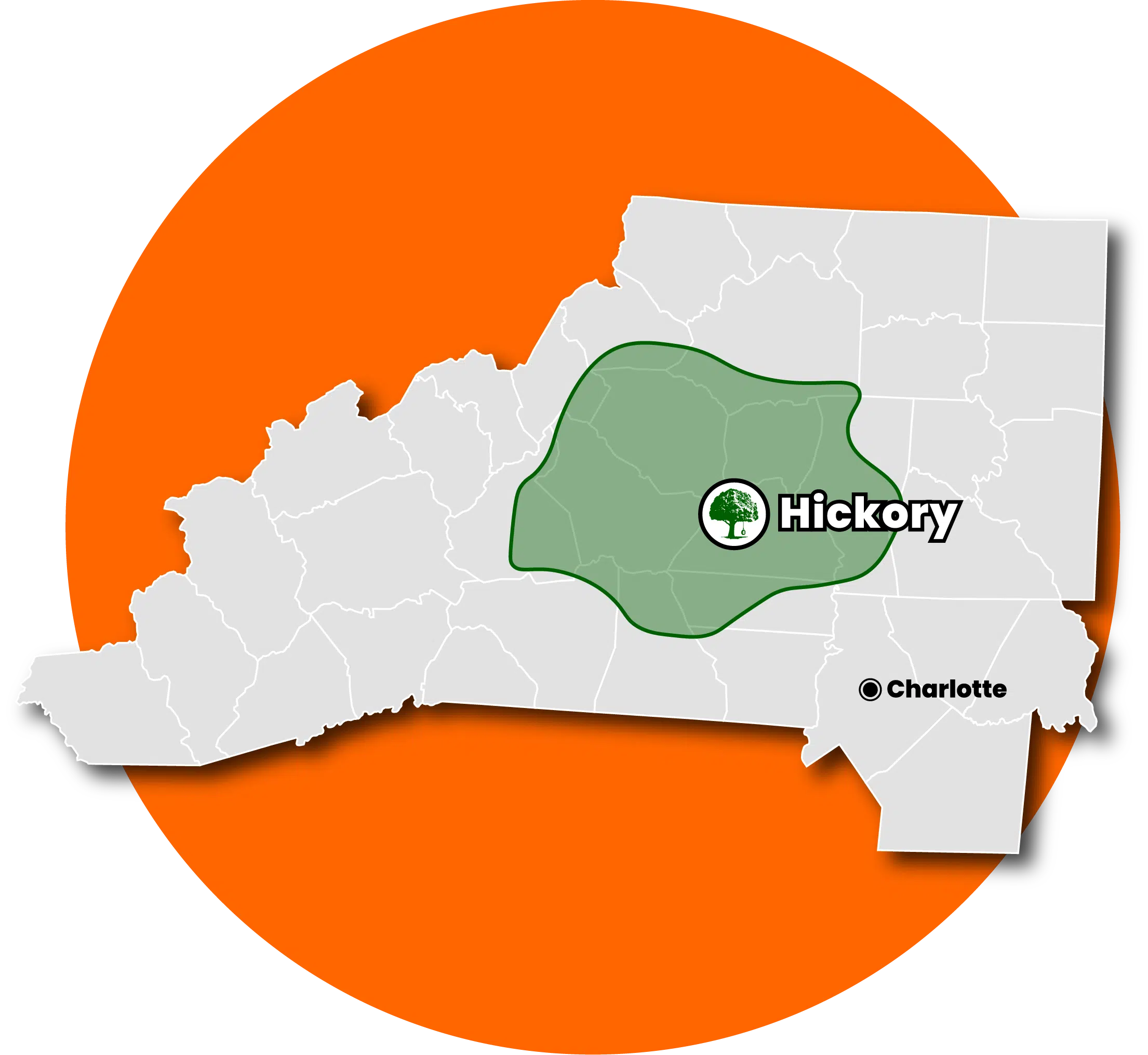

Western North Carolina is home to many large, mature trees that provide beauty, shade, and character to area properties. Unfortunately, these same trees can develop structural weaknesses as they age, making proactive risk management increasingly important.
A few factors that commonly make cabling and bracing particularly beneficial in our area include:
Large oaks, hickories, maples, and other long-lived trees often develop heavy limbs, multiple stems, or structural defects that may benefit from supplemental support.
Strong winds and periodic ice storms can place significant stress on trees, significantly increasing the likelihood of branch failure in trees with existing structural weaknesses.
Many local property owners value their trees and prefer to avoid unnecessary removals whenever possible — something cabling and bracing often allow.
Whether you’re concerned about a mature tree near your home or simply want to preserve a valuable specimen for future generations, ArborPro Tree Service can help determine whether cabling and bracing is an appropriate solution for your situation.
Only an ISA-certified arborist can determine whether or not a tree may be a good candidate for cable or brace installation. However, there are a few general clues you can look for, which may point you in the right direction, including:
It’s worth pointing out that cabling and bracing are most commonly used for hardwood species — especially maples, elms, and oaks — than conifers, though there are exceptions.

In Western North Carolina, cabling and bracing services generally cost between $500 and $2,500, depending on the specifics of the project. A few of the most important factors that go into determining the price of a cabling or bracing project include:
Ultimately, the best way to determine the cost of your specific cabling or bracing project is to contact ArborPro Tree Service and request a free estimate.
Because cabling, bracing, and other tree-support techniques are relatively unfamiliar to the general public, they often inspire a number of questions. We’ll answer a few of the most common ones we hear below.
Tree cabling and bracing involves the installation of specialized ropes, cables, and hardware designed to provide supplemental support for trees with structural weaknesses. These systems can help reduce the likelihood of failure while preserving valuable trees.
Trees with weak branch unions, included bark (bark that’s trapped within a branch union), long heavy limbs, multiple trunks, or other structural defects may benefit from supplemental support. An ISA-certified arborist can determine whether cabling, bracing, pruning, monitoring, or removal is the most appropriate option.
No. Cabling and bracing systems are designed to reduce risk, not eliminate it entirely. Trees with support systems should continue to be monitored and inspected periodically to ensure the trees remain safe and the support mechanisms continue to be effective.
Not necessarily. Some trees are too hazardous, too compromised, or too structurally unsound to be retained — especially if they’re growing in close proximity to a home, building, sidewalk, or other populated place. However, many trees can be preserved through cabling, bracing, pruning, and ongoing monitoring instead of removal.
Many species can benefit from supplemental support systems. Cabling and bracing are often used on mature shade trees, ornamental trees, and other valuable specimens that have structural weaknesses but remain otherwise healthy.
The lifespan of a cabling or bracing system depends on the hardware used, the tree’s growth, and site conditions. However, many systems will last for 10 to 15 years before they need to be replaced. But periodic inspections are always important to ensure the system remains effective and to identify any adjustments or upgrades needed.
Yes. Trees change over time, and support systems should be inspected periodically by a certified arborist. Regular inspections help verify that the hardware remains effective and that the tree’s condition has not changed significantly.
The impact is minor and worth it. Trees seal over the small, properly placed holes a brace rod or cable bolt needs, and the support gained far outweighs the wound. ArborPro Tree Service installs systems to arborist standards so the hardware protects the tree rather than harming it.
It’s strongly discouraged. Cabling done wrong — wrong placement, wrong hardware, or cables wrapped around limbs — can girdle the tree or fail under load and give a false sense of safety. Getting the configuration right takes an arborist’s read on how the tree is likely to fail, which is exactly what ArborPro Tree Service provides.
Barely. Cables sit high in the canopy and braces are set through the trunk or limbs, so from the ground they’re easy to miss and don’t affect the tree’s shape or shade. ArborPro Tree Service places them for function and keeps the visual impact minimal.
No, and that’s a common misconception. Cabling and bracing support weak unions and limbs within a tree; they can’t pull a leaning tree upright or fix a failing root system. If your tree is leaning from root problems, ArborPro Tree Service will assess whether it’s a candidate for support or genuinely needs removal.
Dynamic systems use synthetic rope that flexes and lets the tree keep building its own strength, while static steel-cable systems rigidly limit movement for trees that need firmer support. Each suits different situations, and an ISA Certified Arborist with ArborPro Tree Service chooses based on the tree’s structure and how it’s likely to fail.
Not all trees can be saved by cabling and bracing services, but because they can help you avoid the costs of removal and keep the trees you love, it’s worth having an ISA-certified arborist evaluate them. Contact ArborPro Tree Service today and let us determine if your trees would benefit from some additional support.
Is a stubborn tree stump blocking your yard and making mowing hard? Stump grinding in Granite Falls, NC grinds stumps

Have you ever stepped outside after a North Carolina storm and wondered what it just did to your trees? One

Commercial properties in Burke County and Caldwell County depend on safe, well-maintained trees to create a professional and welcoming environment.
Posted on Google
 Randy Roberts5 days ago
Trustindex verifies that the original source of the review is Google.
ArborPro cut down two good sized trees for me. Tight confines, I knew it would be a tough job. Their price was very fair. They did a great job. I am very well pleased.Posted on Google Allison Elrod5 days agoArborPro did a great job taking care of my trees. They had a fast response to diagnose a tree issue and did what they said they would do in a very professional manner. Very knowledgeable staff. They checked several times during the trimming process to be sure I was happy. They cleaned up my yard better than when they showed up. I am more than happy with the results and recommend to anyone.Posted on Google
 Nathan McKinney8 days agoThe crew was very professional and worked hard until the job was donePosted on Google
 Must Love Food42 days agoHIGHLY recommend!!Posted on Google
 Down South Adventures92 days agoHoly crap guys, I’ve used tons of local tree services and luckily they have all been pretty great, but I have to say the folks at Arbor Pro Tree Service have set a very high bar that’s going to be hard to beat! The crew was so fast and efficient, and made sure to come get me and walk the property lines to make sure I was satisfied. I thought for sure this was going to be a 5 to 6 hour job and they were done in less than two hours! The price, the quick timeframe, and the crew making sure I was completely satisfied before they left Let’s me know what tree service I’m using from here on out!Posted on Google
 Travis Smith96 days agoGreat and efficient service. Had an old large maple very close to the house and within a small, backyard fence that needed removing as it had become too large and dangerous to leave looming over my home. Justin was polite and professional throughout the entire project and most importantly the tree was removed without any injuries or incidents. Very happy and would highly recommend of you need any tree removal done.Posted on Google
 Robert Martin106 days agoArborPro Tree Service trimmed two trees beside our house that had rotten branches that threaten the long term health of our trees. We are completely satisfied with their work, knowledge, and expertise. They know what they are doing and take great pride in caring out their work.Posted on Google
 Ron Livingston127 days agoJustin and his crew were responsive, professional, and did a fantastic job with our trees. The work that they completed truly transformed our property.Posted on Google
 Molly McDonough132 days agoWe needed two large oak trees removed and had several companies come out. Arbor pro took the time to really assess the trees and they had the best offer. They were able to do the removal within two days. They were very professional. I would recommend them 100%!Posted on Google
 John Thorpe146 days agoJustin and his team have been great! They were on time and professional which you don’t see much in tree work. Nice job guys!
We’ll get the tree off your home or structure quickly and help you navigate the insurance claims process from start to finish if necessary!
Feel free to leave your contact information on our online form. A consultation is always free, and it’s the first step towards finding a tree care solution!
